The client experienced specific issues around project‑type service requests:
Service requests identified as project work required escalation from Freshservice into Jira
The escalation process was manual and inconsistent
Engineering and project teams lacked service context when work reached Jira
Updates and resolution progress had to be manually communicated back to the service desk
Knowledge and documentation stored in Confluence were disconnected from service requests
1. REALITY GAP MAPPING
The mapping highlighted that while Freshservice, Jira, and Confluence were all in use, they operated independently. Project‑type service requests submitted via the service desk were manually escalated to Jira, causing delays, duplicated effort, and fragmented visibility. Critical service context was often lost during handoffs, and progress updates relied heavily on manual communication.
“Understand the gap. Redesign the flow.”
2. PROCESS RE‑ENGINEERING
The redesigned process ensured:
Only relevant project‑based requests followed the Jira escalation path
Ownership and handovers were clearly defined
Required service and business context was preserved
The service desk retained visibility and control of communication
The focus was on simplifying flow, reducing manual steps, and aligning the process to how teams actually worked.
3. SERVICE DESK ACCELERATION
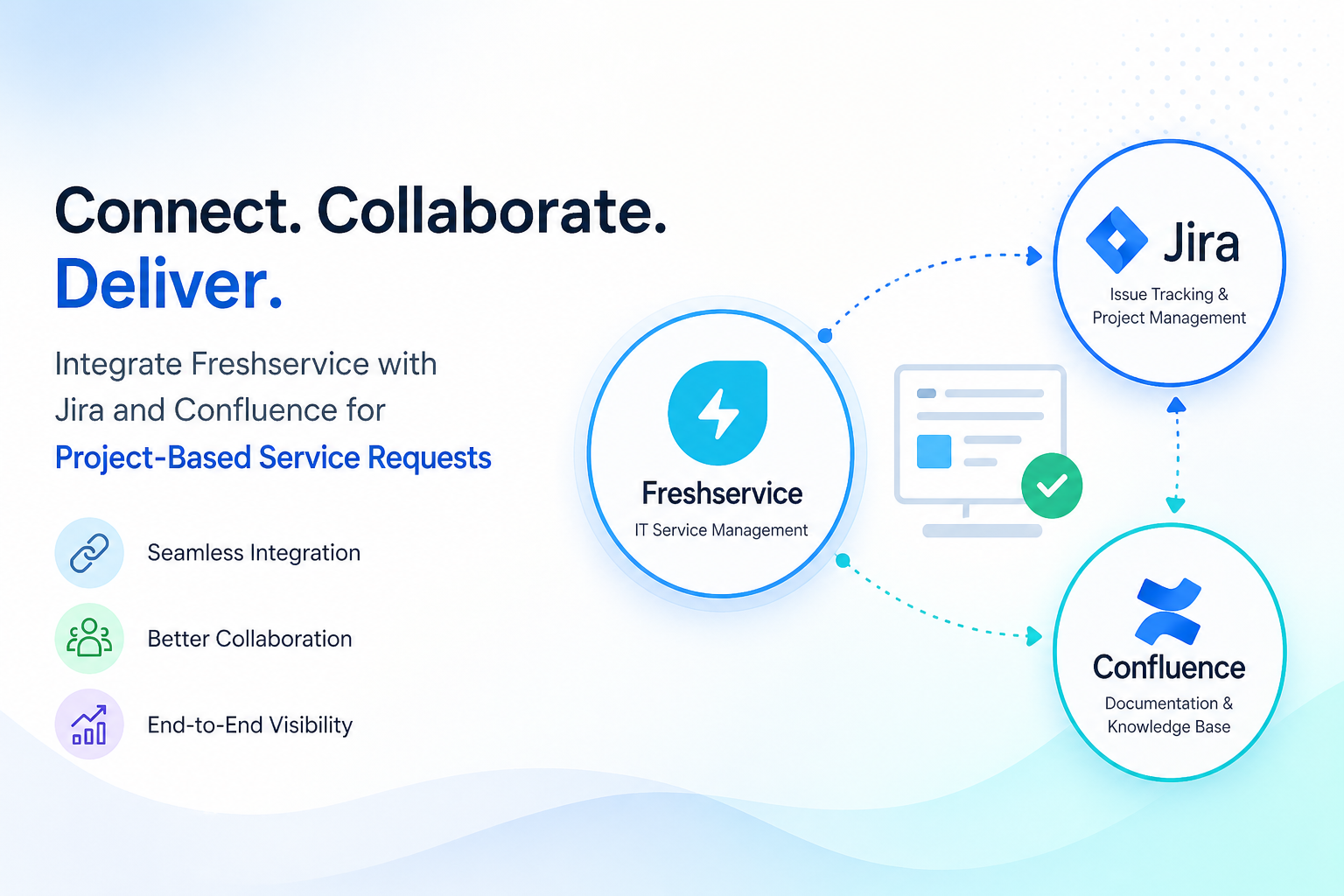
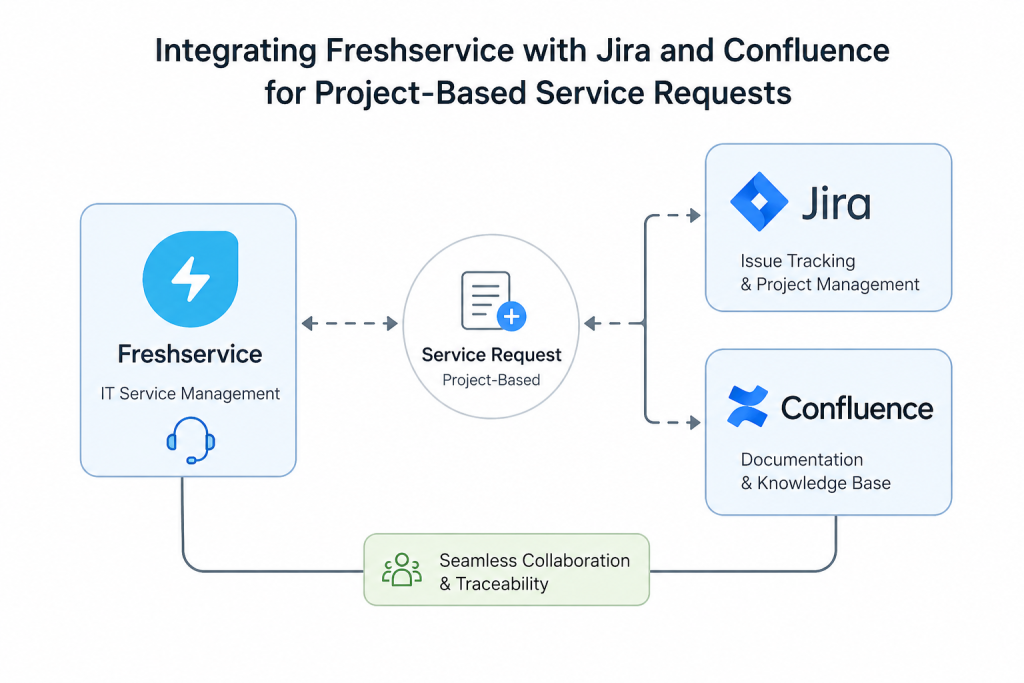
To accelerate execution, we implemented a targeted Freshservice–Jira integration for project‑tagged service requests.
When a request met the defined criteria:
A Jira issue was automatically created from Freshservice
Key contextual data such as request details, priority, and impact were transferred
Jira became the execution platform for project delivery work
Status updates and progress were synchronised back into Freshservice
Freshservice remained the single point of contact for users, while Jira enabled delivery teams to work in their native environment—removing duplication and speeding up resolution.
4. Operational Enablement
Service desk agents were coached on:
Correctly classifying and tagging project‑based requests
Managing escalations without losing ownership
Interpreting Jira‑driven updates within Freshservice
Delivery teams were aligned on:
Using Jira as the system of execution
Linking relevant Confluence documentation once tickets were created in Jira
Maintaining documentation and project context within Confluence.
Although Freshservice could not be directly integrated with Confluence, Jira successfully acted as the bridge, ensuring documentation remained linked to delivery work without complicating the service desk platform.
5. RESULTS & BUSINESS IMPACT
Operational
Faster and more consistent escalation of project‑based requests
Reduced manual handovers and follow‑ups
Clear ownership across service desk and delivery teams
ITSM
Improved visibility into project‑related demand
Cleaner data and more reliable reporting
Better alignment between service management and delivery workflows
Business
Shorter turnaround times for project‑related requests
Improved communication and user experience
Reduced operational friction as demand increased
6. Summary
This engagement focused on improving the handling of project‑based service requests by aligning Freshservice, Jira, and Confluence around a clear, operationally realistic flow. A Reality Gap Mapping exercise revealed manual escalations, fragmented visibility, and loss of context when project requests moved from the service desk to delivery teams. In response, we re‑engineered the process for project‑tagged requests only, implemented a targeted Freshservice‑to‑Jira integration to accelerate execution, and used Jira as the bridge to Confluence for project documentation. Through operational enablement, teams adopted the new way of working consistently, resulting in faster request handling, reduced manual effort, improved visibility and data quality, and stronger collaboration—delivering measurable operational, ITSM, and business improvements without unnecessary complexity.
See How This Approach Works for You
Start with a structured ITSM evaluation covering assessment, optimisation, and enablement.